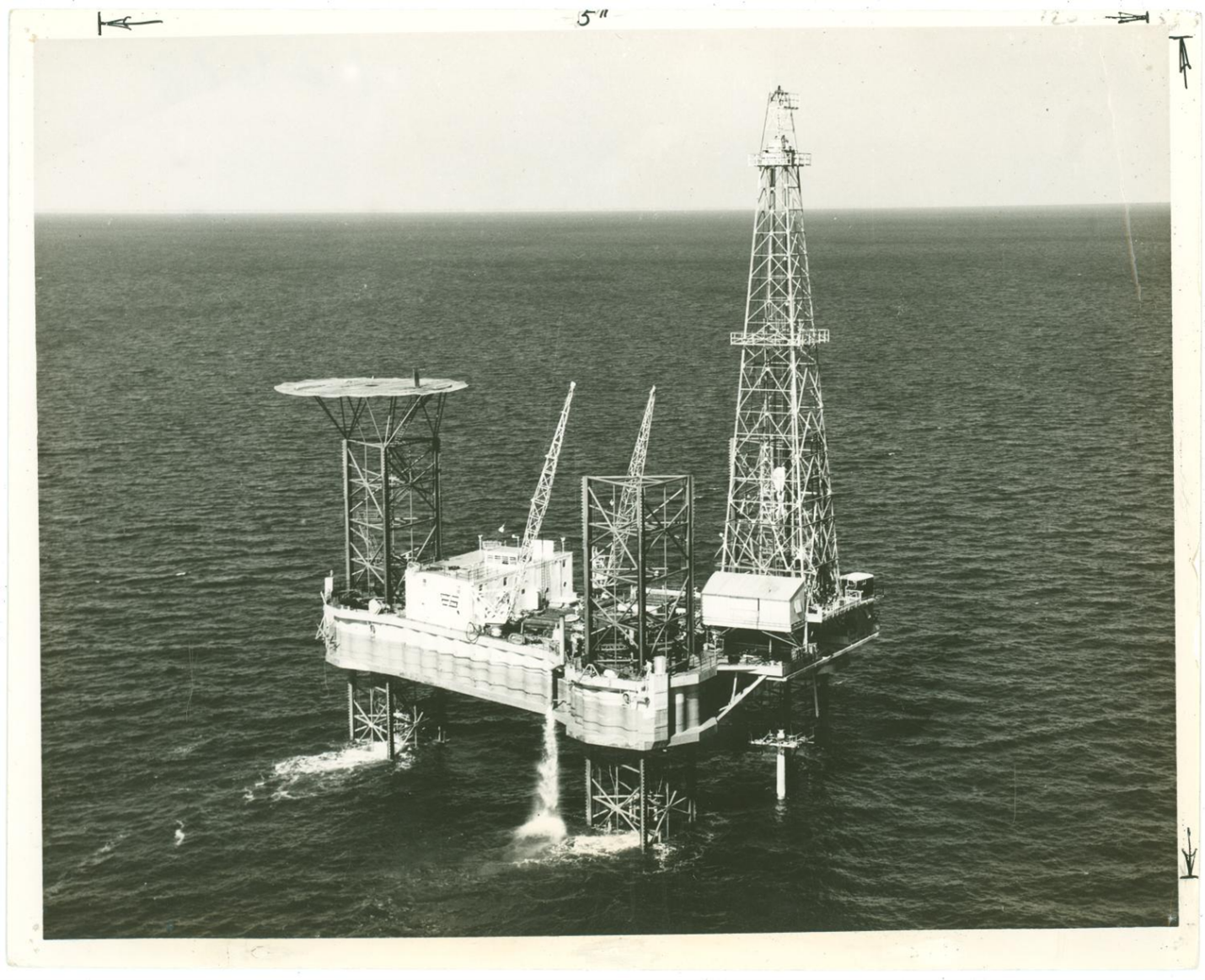
Leg Penetration Assessment (LPA) did not begin as a formal discipline.
In the 1960s–70s, early jack-up operations particularly in the Gulf of Mexico relied on limited site investigation data, classical bearing capacity theory, and operational experience. Engineers worked with sparse borings, simplified soil profiles, and methods originally developed for shallow foundations.
Spudcan penetration was often assessed using adaptations of bearing capacity formulations such as Meyerhof (1951, 1963) [1] [2]. The seabed was idealised into simple layers, and calculations were performed for a few representative conditions rather than continuous profiles.
There was little standardisation. Approaches varied between operators, often shaped by internal experience and regional knowledge. In many ways, early jack-up operations became full-scale geotechnical experiments.
When punch through events were first observed, how did the industry interpret them without the analytical tools we now rely on?
Key behaviours such as punch-through in sand over clay, unexpected deep penetrations, or extraction difficulties were first observed offshore before being fully understood analytically [2], [3]. These events highlighted the importance of layering, drainage conditions, and loading rate factors not well captured by early simplified models.
As offshore activity expanded, accumulated experience was gradually formalised into guidance. A key milestone was the publication of the SNAME Technical & Research Bulletin 5-5A (1991) [3].
This marked an important transition. LPA evolved from isolated calculations into a broader structured process combining site investigation, analytical methods, and engineering judgement. Much of today's standard practice was built through observation, iteration and sometimes failure offshore.
𝘼𝙨𝙠𝙞𝙣𝙜 𝙩𝙝𝙚 𝙘𝙤𝙢𝙢𝙪𝙣𝙞𝙩𝙮!
- 𝙁𝙤𝙧 𝙩𝙝𝙤𝙨𝙚 𝙬𝙝𝙤 𝙬𝙤𝙧𝙠𝙚𝙙 𝙬𝙞𝙩𝙝 𝙚𝙖𝙧𝙡𝙮 𝙟𝙖𝙘𝙠‑𝙪𝙥 𝙤𝙥𝙚𝙧𝙖𝙩𝙞𝙤𝙣𝙨, 𝙬𝙝𝙖𝙩 𝙥𝙧𝙖𝙘𝙩𝙞𝙘𝙚𝙨 𝙤𝙧 "𝙧𝙪𝙡𝙚𝙨 𝙤𝙛 𝙩𝙝𝙪𝙢𝙗" 𝙛𝙧𝙤𝙢 𝙩𝙝𝙖𝙩 𝙚𝙧𝙖 𝙨𝙩𝙞𝙡𝙡 𝙞𝙣𝙛𝙡𝙪𝙚𝙣𝙘𝙚 𝙮𝙤𝙪𝙧 𝙩𝙝𝙞𝙣𝙠𝙞𝙣𝙜 𝙩𝙤𝙙𝙖𝙮?
- 𝘼𝙨 𝙤𝙛𝙛𝙨𝙝𝙤𝙧𝙚 𝙬𝙞𝙣𝙙 𝙢𝙤𝙫𝙚𝙨 𝙞𝙣𝙩𝙤 𝙙𝙚𝙚𝙥𝙚𝙧 𝙬𝙖𝙩𝙚𝙧𝙨 𝙖𝙣𝙙 𝙢𝙤𝙧𝙚 𝙘𝙤𝙢𝙥𝙡𝙚𝙭 𝙜𝙧𝙤𝙪𝙣𝙙 𝙘𝙤𝙣𝙙𝙞𝙩𝙞𝙤𝙣𝙨, 𝙬𝙝𝙖𝙩 𝙖𝙨𝙥𝙚𝙘𝙩𝙨 𝙤𝙛 𝙇𝙋𝘼 𝙣𝙚𝙚𝙙 𝙩𝙝𝙚 𝙣𝙚𝙭𝙩 𝙢𝙖𝙟𝙤𝙧 𝙡𝙚𝙖𝙥 𝙛𝙤𝙧𝙬𝙖𝙧𝙙?